
TEXT ENCODING INITIATIVE (TEI)
Workshop abstract
This workshop combines taught and practical sessions with case-studies introducing the use of the Guidelines of the Text Encoding Initiative (TEI), with a focus on the representation and publishing of primary sources. TEI is a very broad and flexible standard, so we will also concentrate on how TEI can best be used in specific research contexts.
We will showcase a number of projects in the fields of digital editing, text-analysis and publication. Case studies will cover both specific textual phenomena and those common to diverse media and genres. Core aspects of TEI to be covered in the hands-on exercise sessions include structural elements of texts, metadata, representing people, places, dates and groups, the transcription and description of documents, encoding correspondence, and how to query, transform and publish your texts.
Participants will leave with a grounding based on practical experience in what the TEI can do to represent both the physical and the linguistic features of documents, how it can inform the analysis of texts, and how it can form part of a publication pathway.
No previous experience with markup, XML, TEI, or editing is assumed.
Learning objectives
Understand key aspects of XML and related technologies (including XPath, schemas); be confident in creating, editing and navigating XML documents; be familiar with different pathways to publication.
Understand TEI as a community, a consortium and a set of guidelines; be familiar in detail with the core modules of the TEI guidelines; understand the implementation of TEI in a number of real-world projects.
Be ready to use TEI in your own research projects.
Course level
Beginner
Convenors

Huw Jones
Huw Jones is Head of the Digital Library at Cambridge University Library, and Director of CDH Labs at Cambridge Digital Humanities. His work spans many aspects of collections-driven digital humanities, from creating and making collections available to their use in a research and teaching context. He also teaches the collections and methodology core course on the Digital Humanities MPhil at Cambridge University. Cambridge Digital Library is the University’s main platform for the digital humanities, containing almost 50,000 items ranging from the papers of Isaac Newton and Charles Darwin, to manuscript and photograph collections representing the global scope of the Cambridge's physical collections.

Matthew Holford
Matthew Holford is Tolkien Curator of Medieval Manuscripts at the Bodleian Library. He has been actively involved with TEI since 2011, specializing in digital editing and manuscript cataloguing. He has taught on the TEI strand at DHOxSS since 2015.
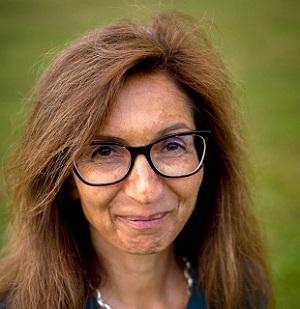
Yasmin Faghihi
Yasmin Faghihi is Head of the Near and Middle Eastern Department at Cambridge University Library and Chair of the FIHRIST Board of Directors (on-line union catalogue for manuscripts from the Islamicate world). She has been involved in collaborative work to create standardised practices for manuscript description in TEI. Yasmin teaches targeted use of TEI to new contributors to FIHRIST and coordinates workflow activities for the catalogue. She has been a major contributor to Cambridge Digital Library and taught TEI at workshops in Manchester, Oxford and as part of the Digital Humanities Programme in Cambridge.
Workshop programme
Monday 24th August
Registration 08:00 - 09:00 hours
Exact timings are subject to change before summer school commences.
09:00 - 10:30: Opening Keynote: Information & Interaction: Scholarship at the Nexus of (Hu)Man and Machine
Abstract: The Digital Humanities are a broad community. It embraces methodological diversity, and brings together domain experts from across the wide landscape of the Humanities. Events such as the DHOxSS stand as testament to the richness of the field, and present us with unique opportunities for information exchange, knowledge acquisition, and upskilling. This talk takes a moment to recognise the community of DHers that has contributed to a body of work that uses the Linked Data information publication paradigm with datasets from the Humanities. These projects are case study examples that celebrate the ways in which the Digital Humanities are not just about developing computational systems, but also about the immense value and effect of human infrastructure as part of our research.
Speaker: Dr Terhi Nurmikko-Fuller (RMIT University)
Dr Terhi Nurmikko-Fuller is an Associate Professor, Information Interaction at the School of Computing Technologies at RMIT University in Melbourne, Australia.
10:30-11:00 Refreshment break
11:00-12:30 What is TEI and why you might want to use it
Abstract: The principles of XML, markup and TEI and how they relate to research questions.
Speakers: Yasmin Faghihi, Matthew Holford and Huw Jones
12:30-14:00 Lunch
14:00-15:30 Exercise: Creating and editing TEI documents
Abstract: The basics of TEI files using the Oxygen XML editor. Transforming TEI for research and publication.
Speakers: Yasmin Faghihi, Matthew Holford and Huw Jones
15:30-16:00 Refreshment break
16:00-17:00 Beyond the basics
Abstract: Working with the TEI header and the body.
Speakers: Yasmin Faghihi, Matthew Holford and Huw Jones
Tuesday 25th August
09:00-10:30 TEI for texts (1)
Abstract: Markup for text structure, editing, transcription, names, dates.
Speakers: Yasmin Faghihi, Matthew Holford and Huw Jones
10:30-11:00 Refreshment break
11:00-12:30 TEI for texts (2)
Abstract: Markup for text structure, editing, transcription, names, dates.
Speakers: Yasmin Faghihi, Matthew Holford and Huw Jones
12:30-14:00 Lunch
14:00-15:30 Case study: TEI and Artificial Intelligence: practical applications
Abstract: Selected case studies in using AI to generate, enrich and encode TEI
Speaker: Yasmin Faghihi and Huw Jones
15:30-16:00 Refreshment break
16:00-17:00 Work in Progress
Opportunities to discuss work in progress if desired.
Facilitators: Yasmin Faghihi, Matthew Holford and Huw Jones
Wednesday 26th August
09:00-10:30 Describing and transcribing manuscripts using TEI
Abstract: Using the msDesc module to encode manuscript descriptions, and creating TEI descriptions and transcription of manuscript material.
Speakers: Yasmin Faghihi, Matthew Holford and Huw Jones
10:30-11:00 Refreshment break
11:00-12:30 Exercise: Encoding manuscripts
Abstract: Practical exercises based on real-life manuscripts.
Speakers: Yasmin Faghihi, Matthew Holford and Huw Jones
12:30-14:00 Lunch
14:00-15:30 Reading Critically with TEI and Computational Methods
Abstract: TBC
Speaker: Dr Megan Bushnell, University of Oxford
15:30-16:00 Refreshment break
16:00-17:00 Work in Progress
Opportunities to discuss work in progress if desired.
Facilitators: Yasmin Faghihi, Matthew Holford and Huw Jones
Thursday 27th August
09:00-10:30 Encoding primary sources - correspondence
Abstract: Using TEI to encode correspondence.
Speaker: Elizabeth Smith, Darwin Correspondence Project
10:30-11:00 Refreshment break
11:00-12:30 Exercise: Encoding correspondence
Abstract: Practical examples and exercises of encoding letters with the correspDesc module.
Speaker: Elizabeth Smith, Darwin Correspondence Project
12:30-14:00 Lunch
14:00-15:30 Case study: The Darwin Correspondence Project
Abstract: Real-world projects using TEI: the Darwin correspondence project.
Speaker: Elizabeth Smith, Darwin Correspondence Project
15:30-16:00 Refreshment break
16:00-17:00 Work in Progress
Opportunities to discuss work in progress if desired.
Facilitators: Yasmin Faghihi, Matthew Holford and Huw Jon
Friday 28th August
09:00-10:30 Using Xpath to query TEI
Abstract: A practical approach to the Xpath query language.
Speaker: Mike Hawkins, Newton Project
10:30-11:00 Refreshment break
11:00-12:30 Customising the TEI with schemas
Abstract: Using schemas to help with the creation and editing of TEI.
Speaker: Mike Hawkins, Newton Project
12:30-14:00 Lunch
14:00-15:00 Case study: The Newton Project
Abstract: Real-world projects using TEI: the Newton project.
Speaker: Mike Hawkins, Newton Project
15:00-15:30 Refreshment break
15:30-17:00 Closing Keynote: AI, Archives, and the Synthetic Past
Abstract: What counts as the past when AI can generate voices, personas, and narratives from archival and digital traces? This presentation examines how artificial intelligence is reshaping relationships between memory, archives, and historical representation, and asks how these technologies are changing the ways the past is experienced in the present. Drawing on the Leverhulme Trust-funded research project Synthetic Pasts - including our critical-creative research on “AI afterlives” - the talk explores how computational systems simulate, mediate, distort, and commercialise forms of remembrance and cultural memory. It then invites digital humanities researchers to reflect on the conceptual, ethical, and methodological challenges that follow.
Speaker: Dr Jenny Kidd (University of Cardiff)
Dr. Jenny Kidd is a Reader in the School of Journalism, Media and Culture at Cardiff University and researches in the interdisciplinary fields of Digital Heritage and Digital Culture.